
Yoga teacher training · Sri Lanka
200-Hour Hatha Yoga Teacher Training at Ulpotha
Twenty-two days with Samanta Duggal, 200 hours, and you'll live in the village while you do it.
- With Samanta Duggal
- 15 August to 7 September 2027
- 22 days
- Yoga Alliance registration in progress
Thirty years of saying no
We're saying yes to this one
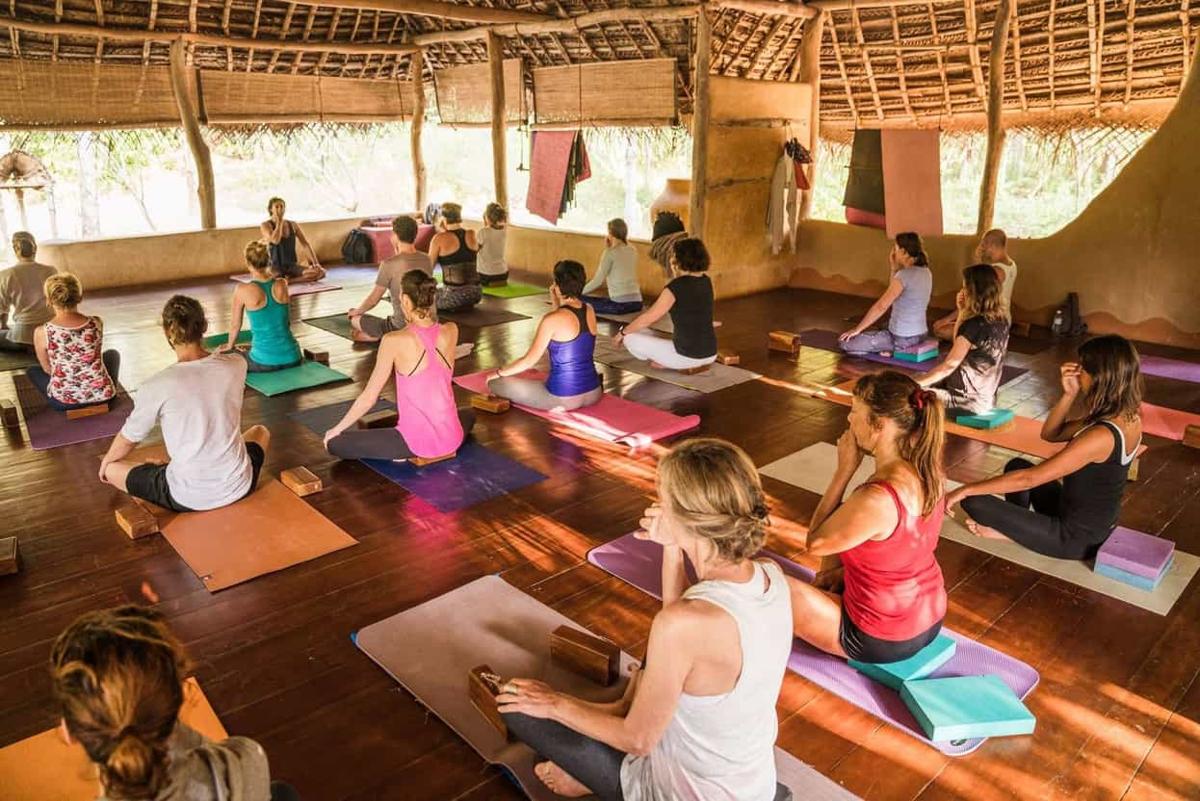
Yoga has been offered at Ulpotha every day since 1997, usually two classes a day. Sixty seasons of it, in a yoga shala with no walls, mostly for people who booked for a fortnight and then came back the year after, and the year after that.
People have asked us to run a teacher training for most of those thirty years, and we've always said no.
We're saying yes to this one, which happens to be in our 30th year. Twenty-two days with Samanta Duggal, 200 hours (including 20 hours online: David Keil's online anatomy course, USD 50, bought and completed before you come), with Yoga Alliance registration in progress, and you'll live in the village while you do it.
Read this before anything else
The practical realities, first
These put some people off. They're supposed to.
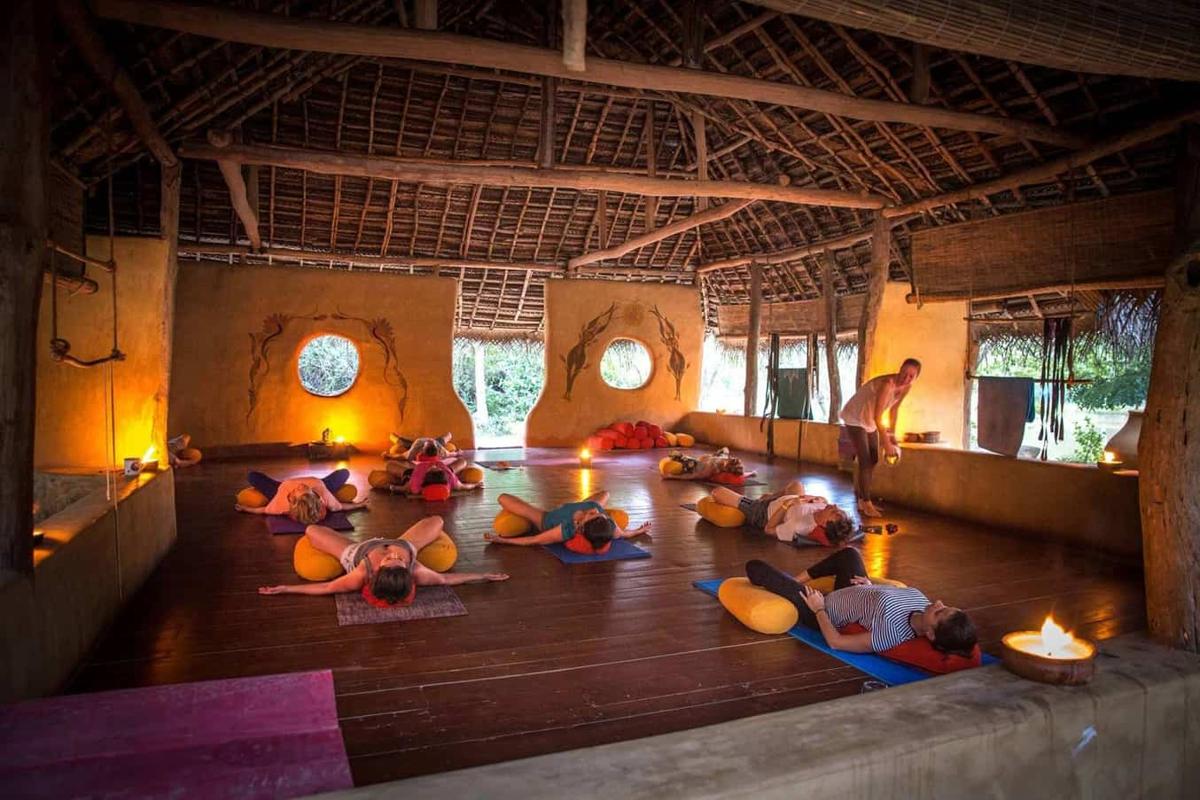
Ulpotha is electricity-free, by design. Lamps go on at dusk, when the moon appears, and that's your lot, so anything you haven't read by four in the afternoon, you'll be reading by lamplight or not at all. The wattle-and-daub huts are normally shared, open-sided, with no doors. You'll have karma yoga duties like everyone else here, which might mean sweeping the shala or helping in the kitchen, and it isn't symbolic. Some days are kept in silence.
It's hot and often humid. In season, the tropical rain comes down hard. Insects are everywhere, the ground is uneven, and none of that is going to change on a Yoga Teacher Training Course timetable.
Food is vegetarian and Sattvic, mostly organic and grown here, cooked over fire in clay pots. There's no bar, and the shop stocks a handful of local products. We are off-grid: there is minimal Wi-Fi, just enough to be in touch with loved ones, the phone signal is limited throughout Ulpotha, and a phone or torch can be charged in the main house.
If that list reads as a set of drawbacks, don't book. We'd sooner tell you now than have you work it out on arrival.
The gurukula bit
The household of the teacher
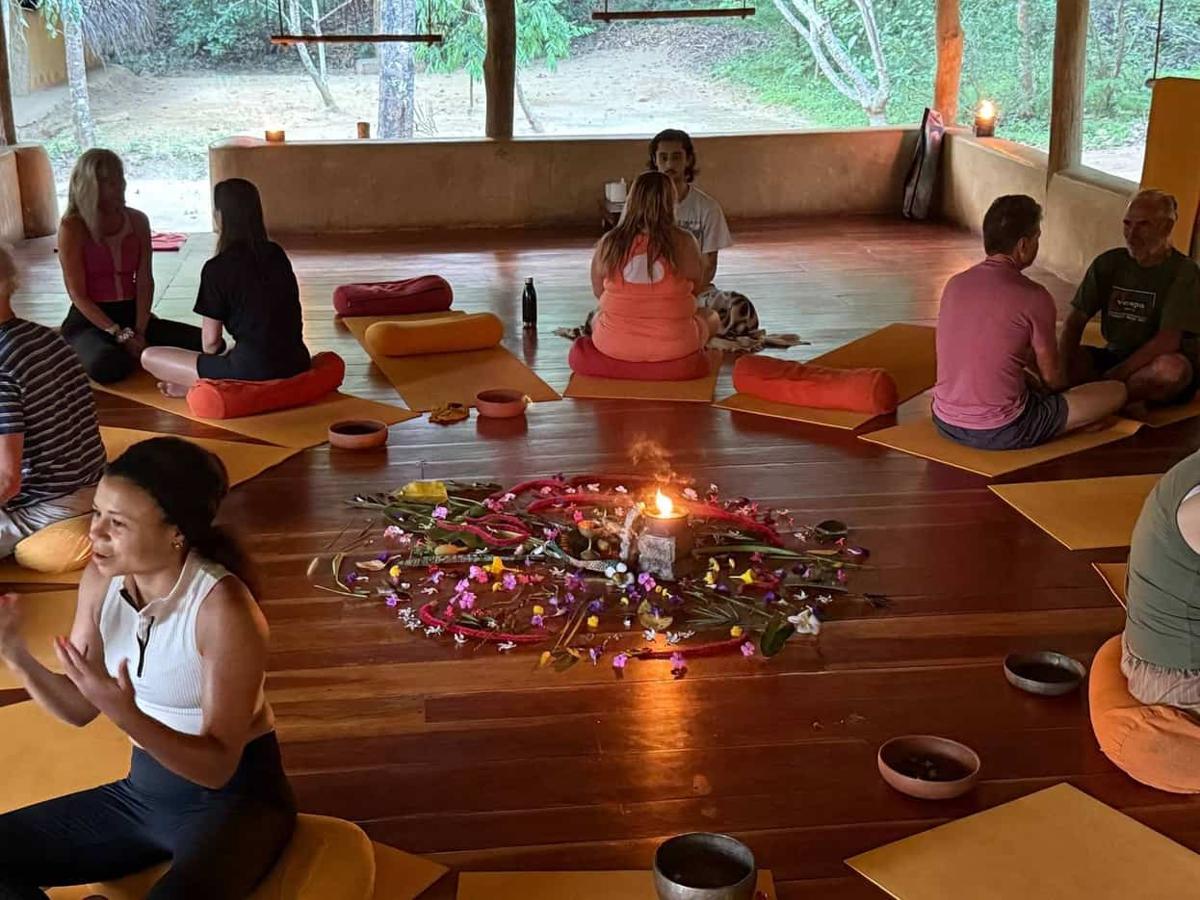
Gurukula translates roughly as the household of the teacher. The idea is old and fairly simple. You don't attend a class and go home afterwards; you live where the teacher lives and pick a lot of it up in the gaps throughout the day.
In the original version there was no syllabus and no certificate. A student turned up at a teacher's house and stayed, sometimes for years, doing whatever work needed doing around the place. Technique was part of what got passed on, and conduct was the rest of it.
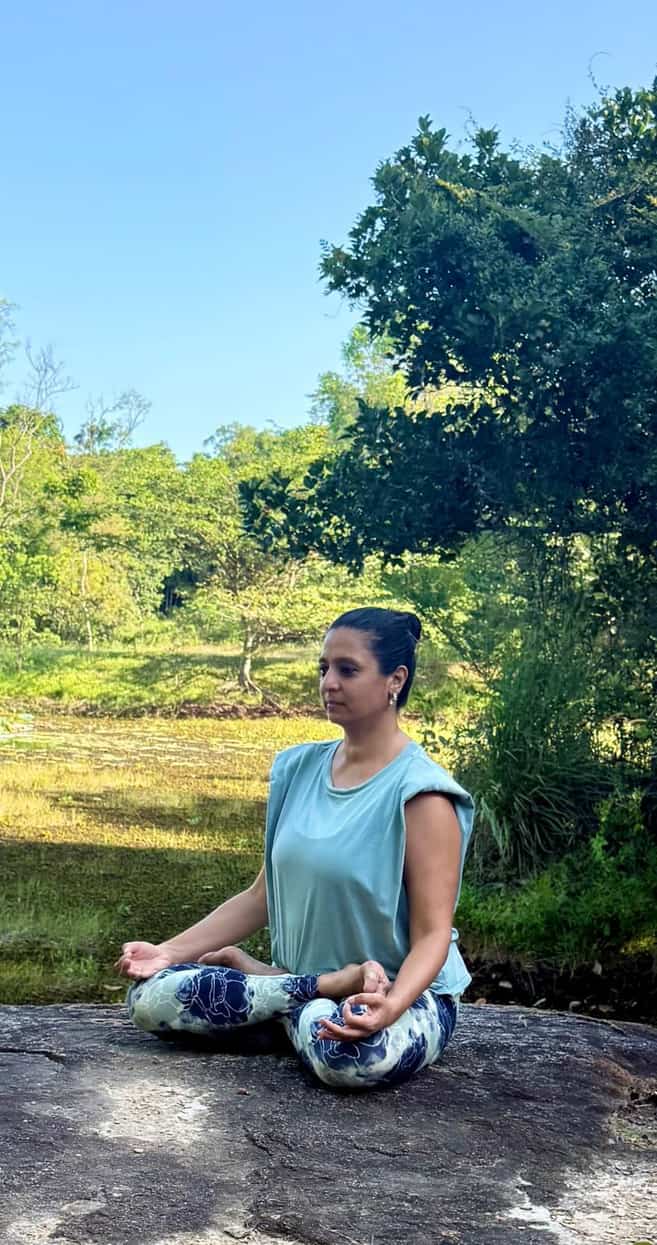
Three weeks isn't that. This tradition survives, though. Samanta eats at the same time and place as everyone else, and most questions on a course like this come up while walking down to the lake from the shala, having a cup of tea, or waiting for lunch.
Most training has to build the conditions for it and set the scene. We don't, because they're already here and have been for three decades. The village gets up when it gets up, and the kitchen cooks when it cooks. You fall in with it, live like a local during your time at Ulpotha and experience the magic of the jungle and the place.
The village isn't staff. The community of villagers live at Ulpotha year-round and has done so for three decades, and you'll be given jobs just like anyone else. That's why you will go home knowing the names of the villagers who cooked your food.
Samanta will watch you for three weeks. There's no separating the course from the rest of the day here, amidst nature, and a few students will find that harder going than the practice itself.
The practical benefit is time. Unhurried time, where you can sit with a chapter of the Sutras for two days before anyone asks what you made of it.
Where it actually happens
A yoga shala with no walls
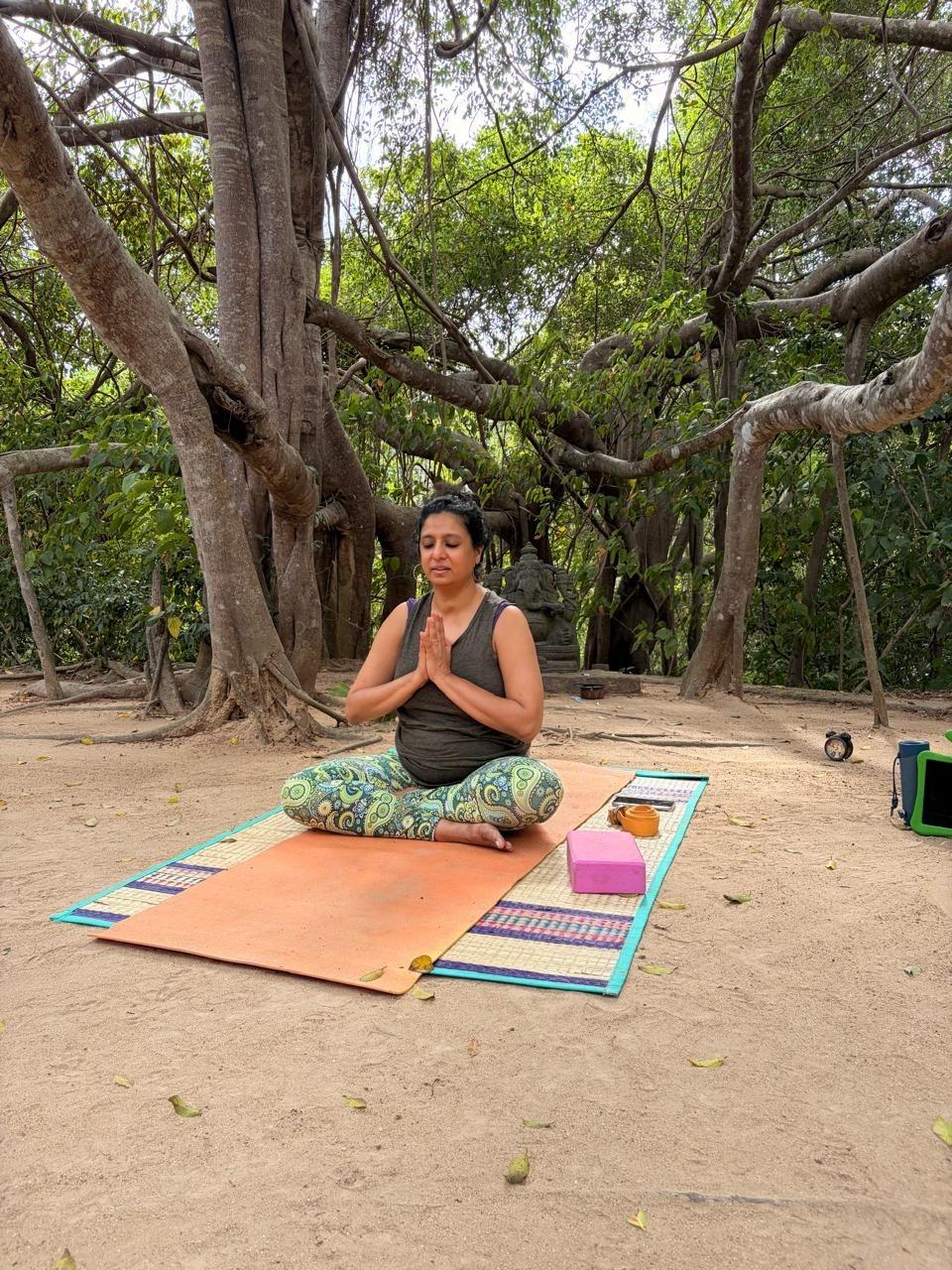
The yoga shala at Ulpotha has no walls, so you practise in whatever the morning is doing. Plenty of it won't be in the shala at all. Philosophy under a tree, surrounded by the jungle; pranayama down at the lake before the heat comes up; anatomy sitting on warm rock with your feet in the grass. Monkeys passing by, elephants in the distance.
This is the part that's difficult to convey to anyone who hasn't been to Ulpotha before. You could study the same syllabus in a studio in London and cover the same material to the same standard. What you couldn't do is spend three weeks in nature waking with the birds, eating food that was in the ground that morning, swimming in the lake and having nothing at all between you and the weather. Human beings aren't built to live indoors, and three weeks of not doing so changes how much of the teaching you'll absorb.
It does something specific for the course study, too. You'll learn the vayus sitting in moving air, which is very different to how it works in a room in a city with the windows shut.
Your teacher
Samanta Duggal
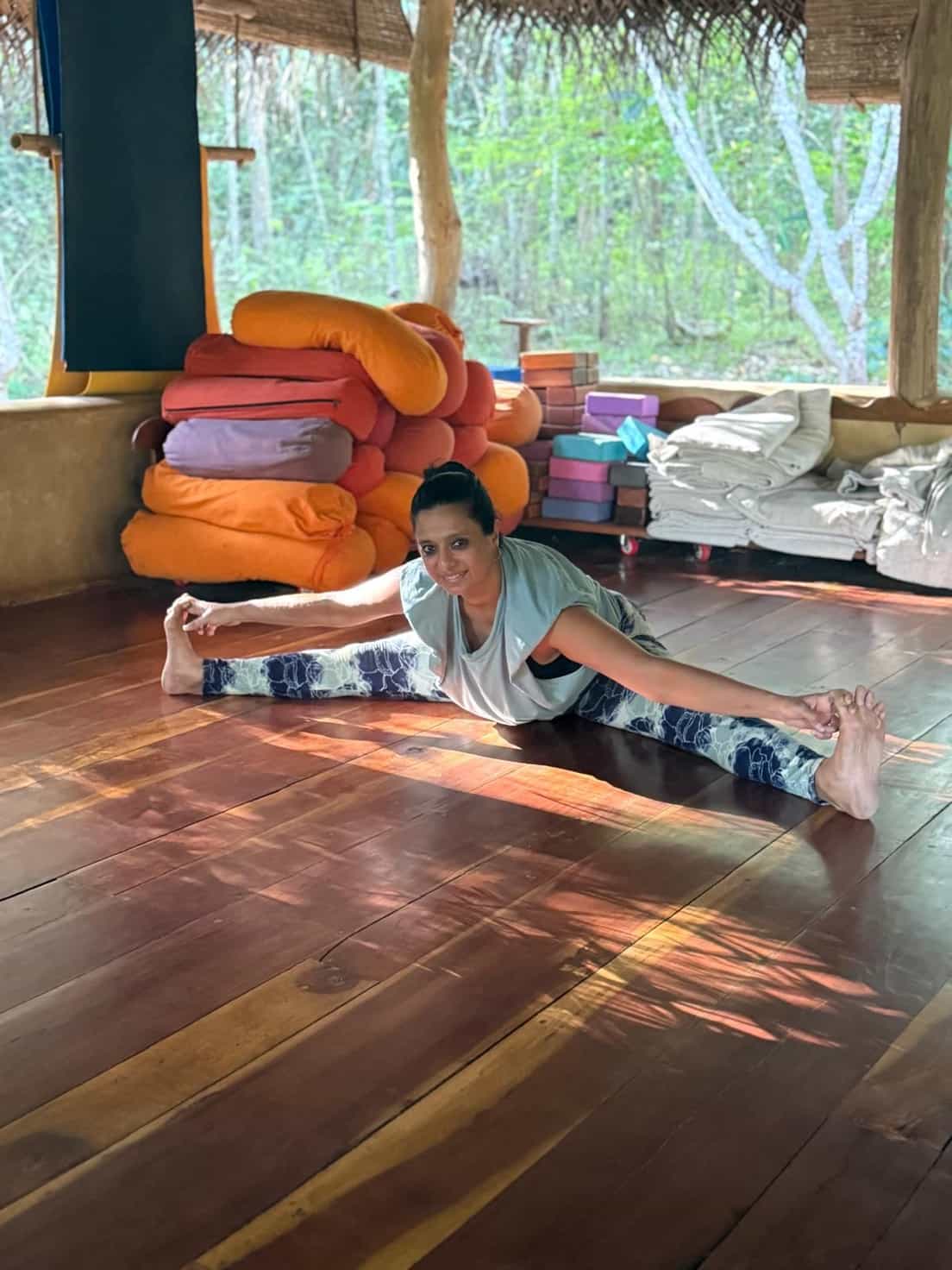
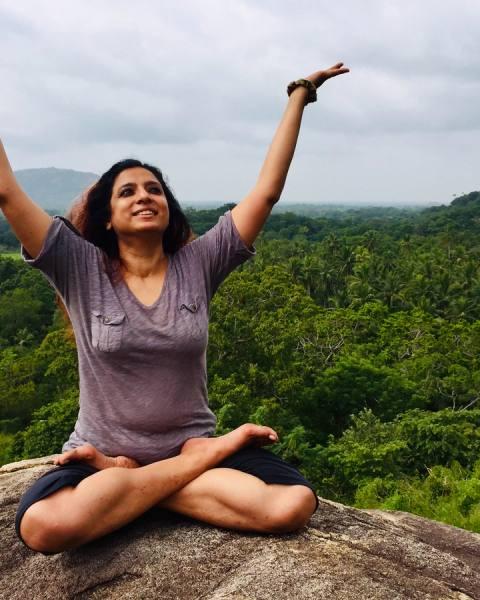
Samanta has been teaching for over twenty years and is traditionally trained. Hatha yoga is the foundation, with Sivananda as the base, plus a fair amount of Iyengar in her approach to alignment, along with vinyasa, yoga therapy, and somatic work.
What you notice in her yoga classes is that she watches first. She'll change an instruction halfway through giving it because she's seen you all, the different body shapes and flexibility. That's harder to teach than sequencing, and it's the part she's most interested in handing on: noticing, aligning and adjusting.
Samanta has taught at Ulpotha for many years and is considered part of the Ulpotha family, so she knows the shala, the heat, and which patches of ground are level enough to use. Her course is exclusive to Ulpotha, and she chose us as her base because of her love of nature and the village community.
Who this is for
You don't have to want to teach
People often take a 200-hour course after ten or fifteen years of practice, not because they want to stand at the front of a room directing, but because they've reached the point where they want to deepen their knowledge and know what lies beneath the postures they've been doing all that time. Come for that. The work is identical, the certificate is identical, and if you change your mind in two years' time, you'll already have it.
The mix tends to do everyone good. A room where every single person is chasing the qualification behaves differently from one where half of them are there for their own sake.
The syllabus
What you'll study
Asana
Standing, seated, balancing, twisting and inverted postures. Backbends, forward bends, hips, shoulders, core work. Alignment and functional movement. Props, modifications, sequencing, and how to adapt a practice for a body that isn't yours. Nobody is chasing the advanced version of a posture here. You'll be asked why you're in it.
Pranayama and the subtle body
Traditional technique alongside breath mechanics, prana and the vayus, nervous system regulation, bandhas, nadis and chakras.
Meditation
A limb of yoga in its own right, not fifteen minutes at the end. Concentration, witnessing, stillness, the traditional approaches, and building something you can keep going at home in February.
Philosophy
The Yoga Sutras, the eight limbs, the yamas and niyamas, sadhana, karma and dharma, the nature of the mind, pratyahara, dharana and dhyana, in their wider Indian context. Studied with one question running underneath it: what does this change about how I live and teach?
Mudra, mantra and bandha
Hasta mudras, the energetic locks, sacred sound, and the symbolism of the chakras, taught as ways of directing attention.
Anatomy
Functional anatomy against live practice. Spine and pelvis, shoulder and hip mechanics, fascia, the diaphragm, movement patterns, injury awareness and sensible adaptation. You'll learn it looking at bodies, including your own.
Somatic and therapeutic movement
The difference between performing a posture and feeling one, and how to spot which a student is doing.
Teaching
Structuring and sequencing a class. Demonstration. Verbal and non-verbal instruction. Observation and adjustment. Mixed-level rooms. Safety and inclusion. Finding a voice that sounds like you. There's a practicum, and you'll get proper feedback on it.
Four things to note
None of it is optional
Sadhana
Your own practice, kept up daily.
Svadhyaya
Time each day for self-study and reflection. The absence of electricity is the reason this works here and generally doesn't elsewhere.
Seva
Karma yoga duties, same as everybody else, done without ceremony.
Mouna
Periods of silence, so that what you've been taught has somewhere to settle.
Before you arrive
What we ask of you first
You'll need at least six months to a year of regular yoga practice. Advanced postures aren't required, and every body is different. Turning up for yourself and for Samanta, and being prepared to work hard for three weeks, is.
Anatomy. David Keil's online anatomy course, USD 50, bought and completed before you come.
Manual. The digital manual and supporting material go out about a month ahead, mainly so the Sanskrit isn't brand new to you on day one.
Reading
Pick one of these, and bring a short written summary and your own reflections on it.
- Light on Yoga
B.K.S. Iyengar - Asana Pranayama Mudra Bandha
Swami Satyananda Saraswati - Meditation and Mantras
Swami Vishnudevananda
Practicalities
The course, in plain terms
- Dates
- 15 August to 7 September 2027
- Length
- 22 days
- Certification
- 200 hours. Yoga Alliance registration in progress.
- Group size
- Up to 20 students
- Accommodation
- Shared, open-sided wattle-and-daub huts. Single huts are available at a supplement and subject to availability; please ask when you apply.
- Food
- Vegetarian and Sattvic, grown at Ulpotha, freshly cooked over wood fires
- Included
- Tuition, accommodation, all meals, drinks, snacks, manual, certification
- Not included
- Flights, transfers, insurance, Ayurveda treatments, the online anatomy course
USD 5,000all in
People ask where that goes, so here it is. Twenty-two nights here at our ordinary guest rate comes to around USD 4,600. The rest covers Samanta, the 200 hours, your manual and your certification. You're paying not far off what a guest pays to sit by the lake and do nothing, with the teaching coming in at the margin.
Early bird
10% off until 17 May 2027.
Deposit
A 40% deposit reserves your place.
Balance
In two further instalments, with the full amount paid by 16 July 2027.
Applying
A small group, on purpose
We keep groups small because we only have so many huts. Fifteen of the right people beats twenty of anyone. Tell us a little about your practice and why now; Pri, who handles our bookings, will get back to you with the next step.
Got it. Pri will be in touch.
She reads every application with Samanta and comes back to you, usually within a day. If it is urgent, message us on WhatsApp.
Before or after
Come as a guest first, if you like
Many of the people who train here will have stayed before. If you haven't, a one- or two-week retreat in the winter or summer season is the surest way to find out whether three weeks of this is for you. Samanta also teaches a Traditional Hatha Yoga and Stress Release retreat in 2027.