Planning
When is the best time for a yoga retreat in Sri Lanka?
Sri Lanka has a season for every traveller. Here's how Ulpotha's retreat windows line up with the island's weather.

Planning
There is a particular kind of traveller who chooses to go somewhere alone, not because they cannot find a companion, but because they know, with some precision, that a companion would change the nature of what they are after. Ulpotha tends to draw this kind of person. And once you're here, Ulpotha has a wonderful way of connecting you with the right people at the right time. What started as a solo travel experience becomes a community experience.
Most people who come to Ulpotha alone will tell you, if you ask them, that they didn't come for the solo travel experience. They came because something in them needed to stop and slow down. The solo part was incidental. Or perhaps not incidental at all, but not something they could explain. There is a particular kind of traveller who chooses to go somewhere alone, not because they cannot find a companion, but because they know, with some precision, that a companion would change the nature of what they are after. Ulpotha tends to draw this kind of person. What started as a solo travel experience becomes a community experience.
There is no organised singles programme. No name tags. No structured socialising designed to take the edge off arriving alone.
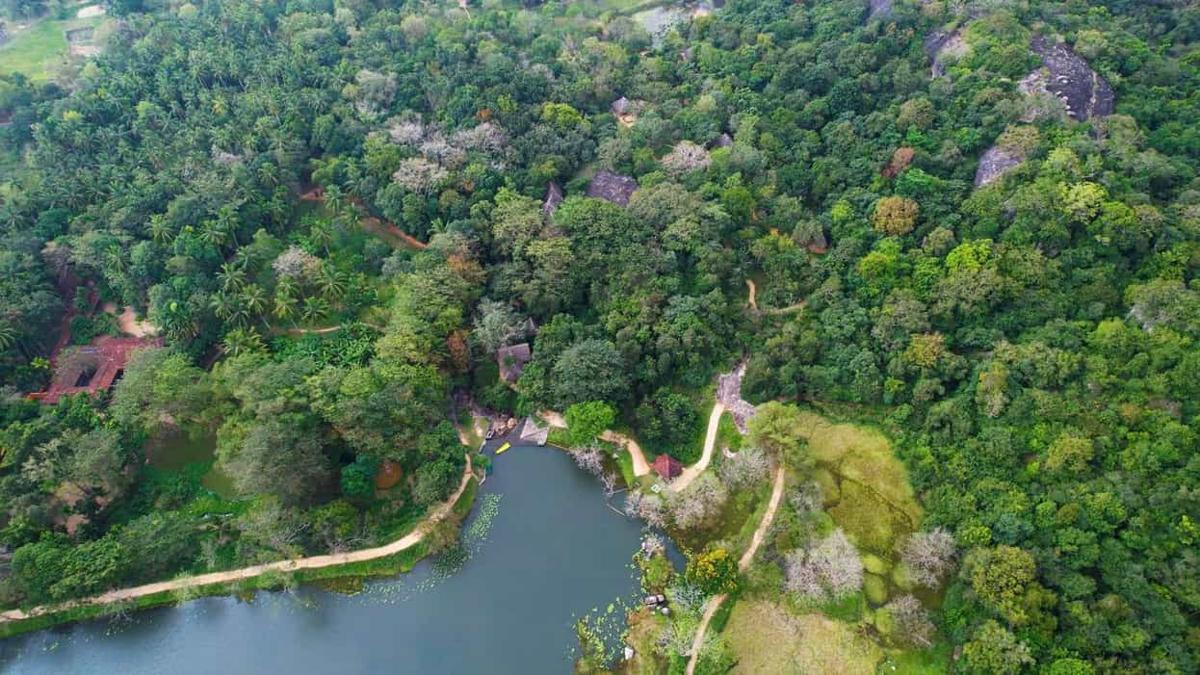
Instead, there is a rhythm that makes solitude feel held rather than exposed. Days at Ulpotha follow a loose pattern shaped by the natural world, not a curated schedule. Morning yoga in the yoga shala as the light comes up over the tank (lake). Breakfast is eaten communally after yoga in the kade hut near the coconut trees. Long open hours in which you can do as much or as little as you like. Ayurvedic treatments in the Ayurvedic Centre. Swimming in the tank, cycling in the jungle. Evenings that wind down with the light.
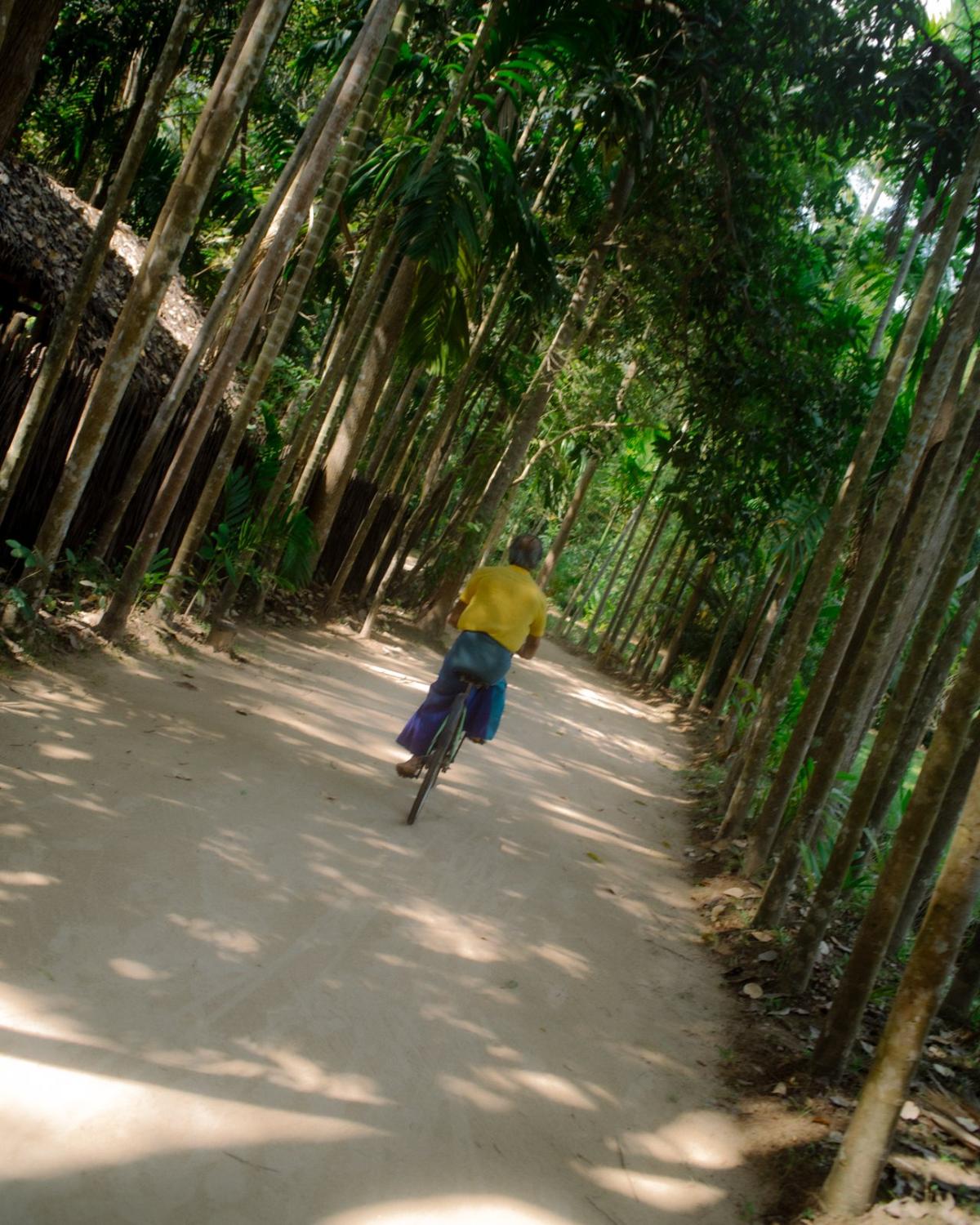
For solo travellers, this structure removes the low-level anxiety of having to fill time or make decisions, which is often what makes solo travel feel effortful rather than restorative. The day takes shape around you. You participate as much or as little as you want.
There is no wifi at Ulpotha. There is no electricity. There are no windows and doors in the 11 wattle-and-daub huts. At night the paths and huts are lit by oil lamps and solar lights and the sounds are frogs and wind and the occasional rustle of something moving through the undergrowth.
For many this is the thing they are most anxious about before they arrive, and the thing they are most grateful for within forty-eight hours.
A proper digital detox is not about willpower or leaving your phone in a drawer. It is about removing the conditions that make constant connectivity feel necessary. At Ulpotha those conditions simply do not exist. The signal is poor. The slow pace of the place makes scrolling feel faintly absurd. After a day or two, you stop reaching for your phones not because you are disciplined but because you have genuinely stopped thinking about them.
For solo travellers this matters in a specific way. Travelling alone with a phone is not really travelling alone. The phone is a companion, a distraction, a lifeline, a way of broadcasting the experience back to an audience instead of simply having it. Without it, you are left with what is actually in front of you: the tank at dusk, helping yourself to the delicious organic vegetarian food, the ability to sit with yourself in the present moment.
The tank at Ulpotha is fed by ancient irrigation channels and has been there, in various forms, for centuries. Swimming in it is one of those experiences that is difficult to describe without either overstating it or making it sound like marketing copy.
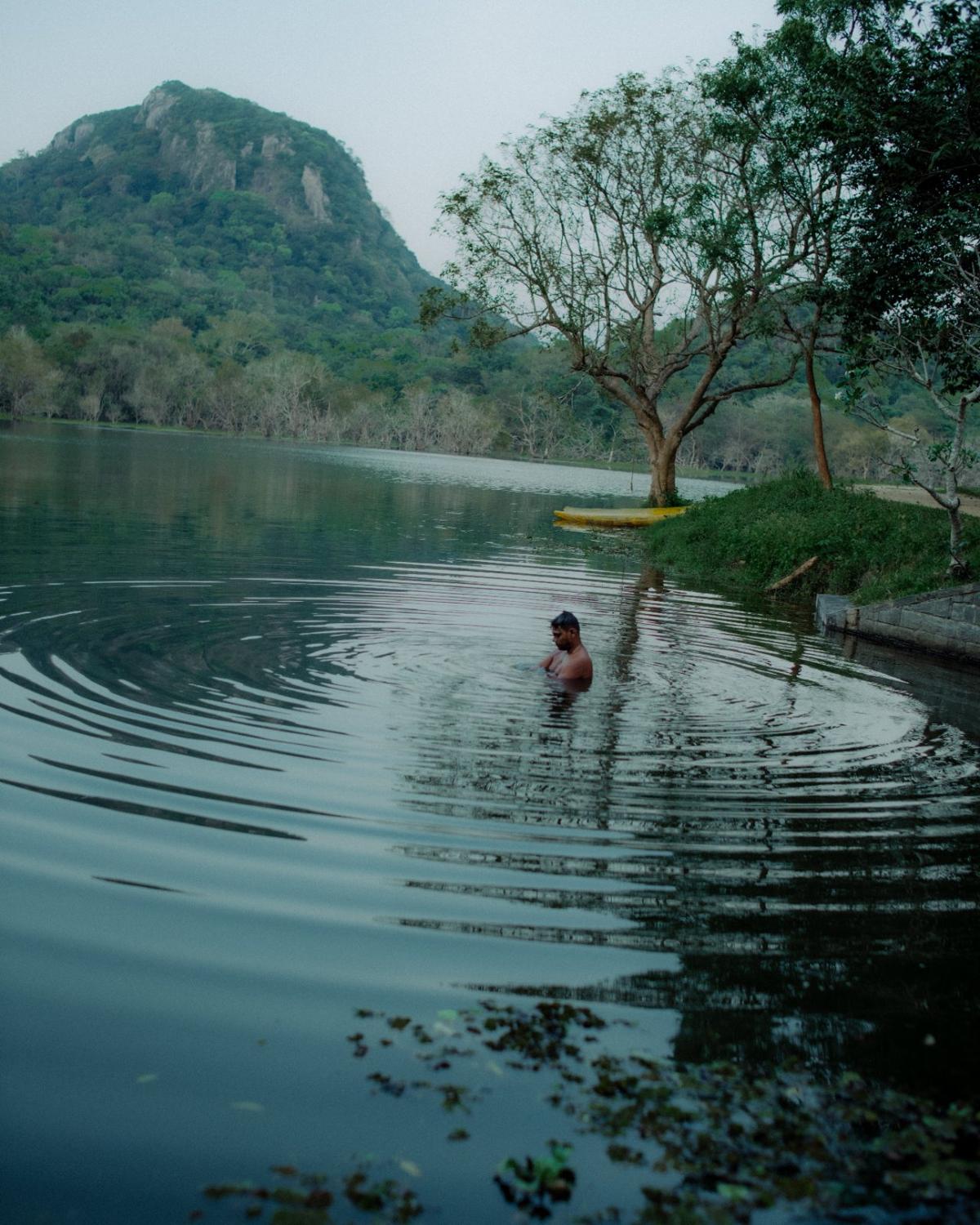
It is not a pool. The water is dark in places and warm at the surface and cool and silky underneath. The late-afternoon light on the water is the kind of thing you would photograph if you still had your phone in your hand.
For solo travellers, the tank offers something particular: the physical pleasure of open water, with no performance attached. You swim alone, or alongside other guests who are also essentially swimming alone, each of you enjoying your own experience without the need to talk. Nobody is watching. There is nothing to coordinate. It is one of the more straightforwardly pleasurable things on offer, and it costs nothing beyond the willingness to get in.
Yoga at Ulpotha is practised outdoors and in the wooden yoga shala and sometimes in the smaller shala with a view over the tank and the surrounding forest. The teaching draws on classical Hatha traditions and is accessible to most levels without being designed to accommodate the least experienced person in the room at the cost of everyone else.
For solo travellers who practise yoga, there is something particular about doing it in this context. The practice is not social, but it is shared. You are on your mat, inside your own body, doing your own work, and so is everyone else. This is yoga practice, not a workshop. Join in or don't, it's up to you. The collective focus of a group of people doing something physical and intentional together, as the day begins, is not a small thing. It is one of the ways Ulpotha makes being alone feel different from being isolated.
If you have never practised yoga or have only practised occasionally, the setting tends to help. Something about being in an open-sided shala with the birds and the light makes the whole enterprise feel less loaded than it can in a studio. There's no pressure to perform at Ulpotha.
Solo travel has a way of returning your attention to your own body. When there is no one to talk to over dinner about the day's events, you notice more: how your back feels, what you are hungry for, how tired you actually are underneath the surface tiredness you have been carrying for months.
Ayurvedic treatment at Ulpotha moves in the same direction. The initial consultation with the doctor is an exercise in paying attention to things you may not have considered or wanted to focus on in some time. Sleep quality. Digestion. Energy levels at different times of day. The questions are practical and specific, and the programme that follows is tailored to what comes out of that conversation.
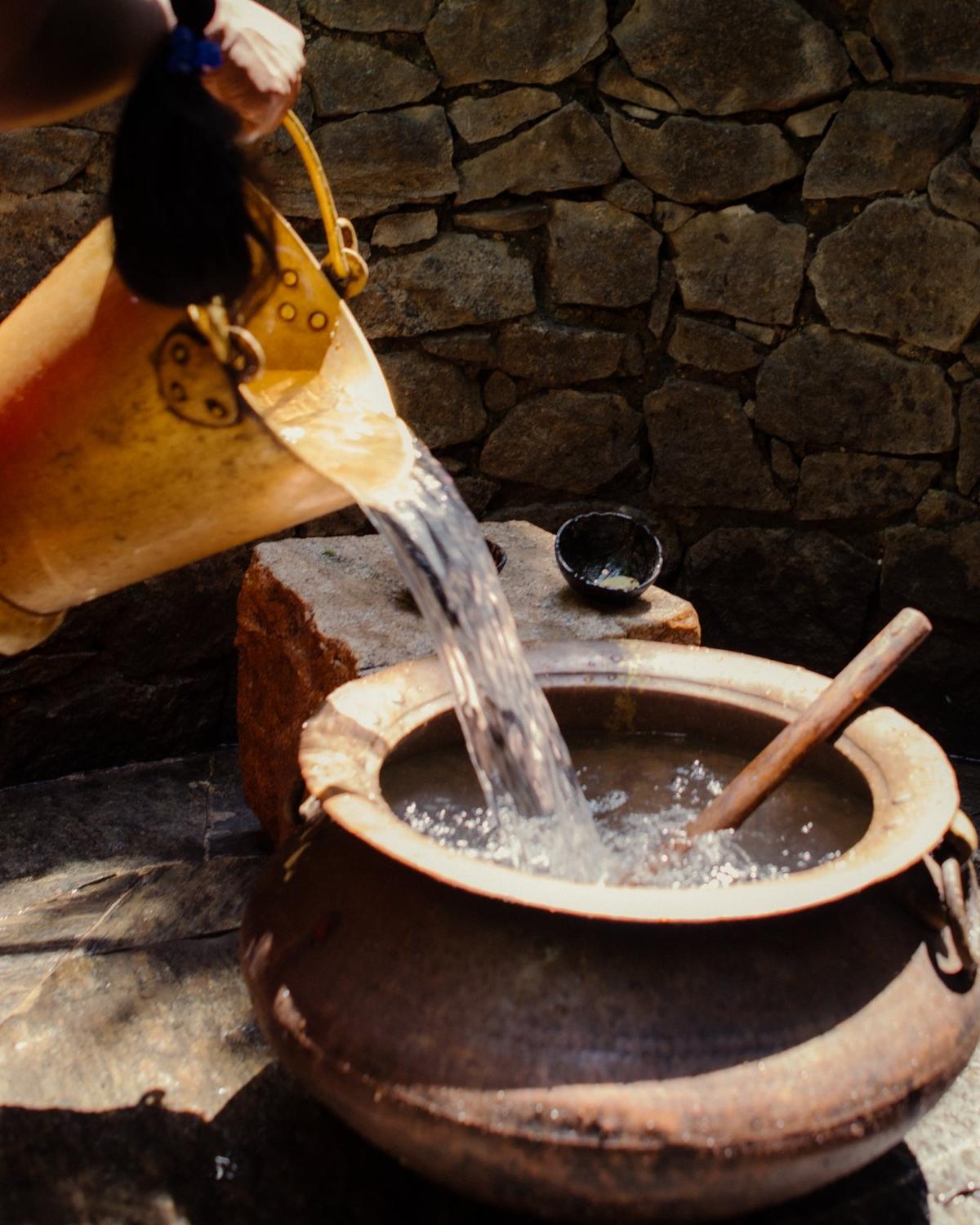
Solo travellers often find that the Ayurvedic aspect of a stay at Ulpotha is different than they expected. Not because the treatments are more powerful than at other retreats, though they are conducted to a high standard, but because arriving alone means arriving without the buffer of another person's needs and preferences. The treatment is simply yours. So is the rest that follows it.
Panchakarma, Ulpotha's more intensive cleansing programme, is available if you're staying two weeks or more, and it is particularly well-suited to solo travellers who want to use the time for something more sustained than a series of individual sessions.
Solo travel, when it works, is an exercise in presence, a form of meditation. There is no shared history to process, no one else's experience to attend to. There is just where you are and what is happening.
Ulpotha is unusually good at making this possible, even if it's uncomfortable at first. The village operates on its own logic, shaped by the agricultural year and the community of people who live and work there. You are visitors to a functioning place, not paying guests in a hospitality operation designed around your luxury and comfort. A distinction that matters.
When you swim in the tank at dusk and the light is doing what it does and the evening is coming in, you are not consuming an experience. You are living one. The difference is harder to explain than it sounds, and easier to feel than you might expect.
Solo travel does not have to mean constant solitude, and at Ulpotha it rarely does. Meals are communal and conversations happen naturally with other guests and with the team. There is no organised mixing, but there is the organic kind that tends to occur when a small group of people are eating the same food, waking at the same hour, and moving through the same landscape together over the course of a week or two.
Many of the solo travellers who come to Ulpotha find that the friendships formed there outlast the retreat. Not because the retreat manufactured connection, but because shared experience in an unusual place tends to produce the real kind.
Ulpotha's retreat season runs from November to April and June to the end of August. Yoga retreats are typically one or two weeks, and the two-week option is particularly well-suited to solo travellers who want enough time to settle in properly and to feel the effects of Ulpotha as the first few days of any retreat are often spent adjusting.
Solo supplements apply and vary by season. The team at Ulpotha is used to welcoming solo guests and is happy to talk through what a stay might look like based on what you are hoping to get from it.
For solo travellers considering a yoga retreat in Sri Lanka, or an Ayurvedic retreat somewhere that doesn't feel like a wellness hotel with the lights dimmed, Ulpotha is worth considering seriously. It is, as The Observer notes 'the best yoga retreat in the world'.
It will not be for everyone. But for the person who knows they need to stop, properly stop, it tends to be exactly right.
Just a thought, the comfort zone is a lovely place but nothing ever grows there.
For the full 2026 retreat calendar and to make an enquiry, visit ulpotha.com/retreats
Planning
Sri Lanka has a season for every traveller. Here's how Ulpotha's retreat windows line up with the island's weather.
Planning
Sri Lanka has spent three years rebuilding its reputation as a destination, and in 2026 it’s doing so with real traction. Tourist...
Planning
Everything You Need to Know Before You Book Your Yoga or Ayurveda Retreat 2026 at Ulpotha, Sri Lanka's original yoga retreat.