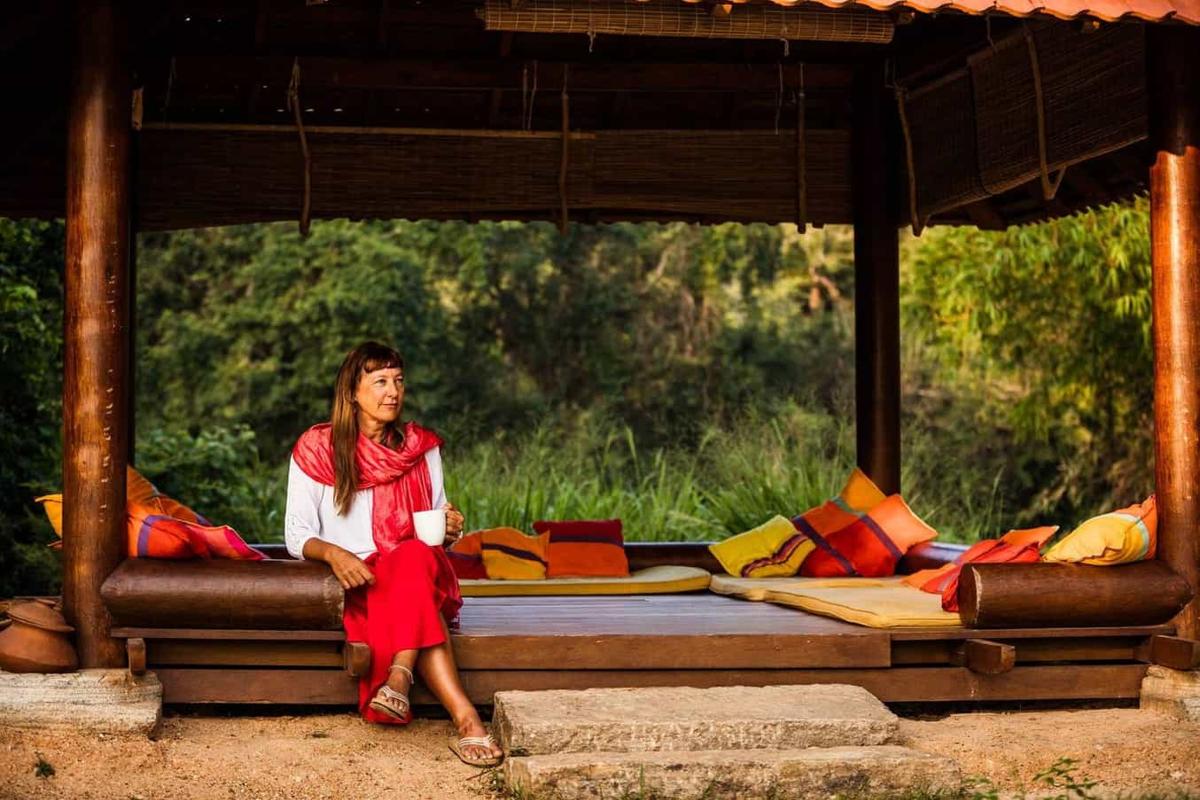
Village life
A Day at Ulpotha: What Your Hours Actually Look Like
Most people arrive at Ulpotha having looked at the photographs without a clear sense of what their time here will actually feel like....

The Ulpotha experience
Why, when you are in Ulpotha, do you stay in earthen rooms with no windows for glass and no doors to lock?
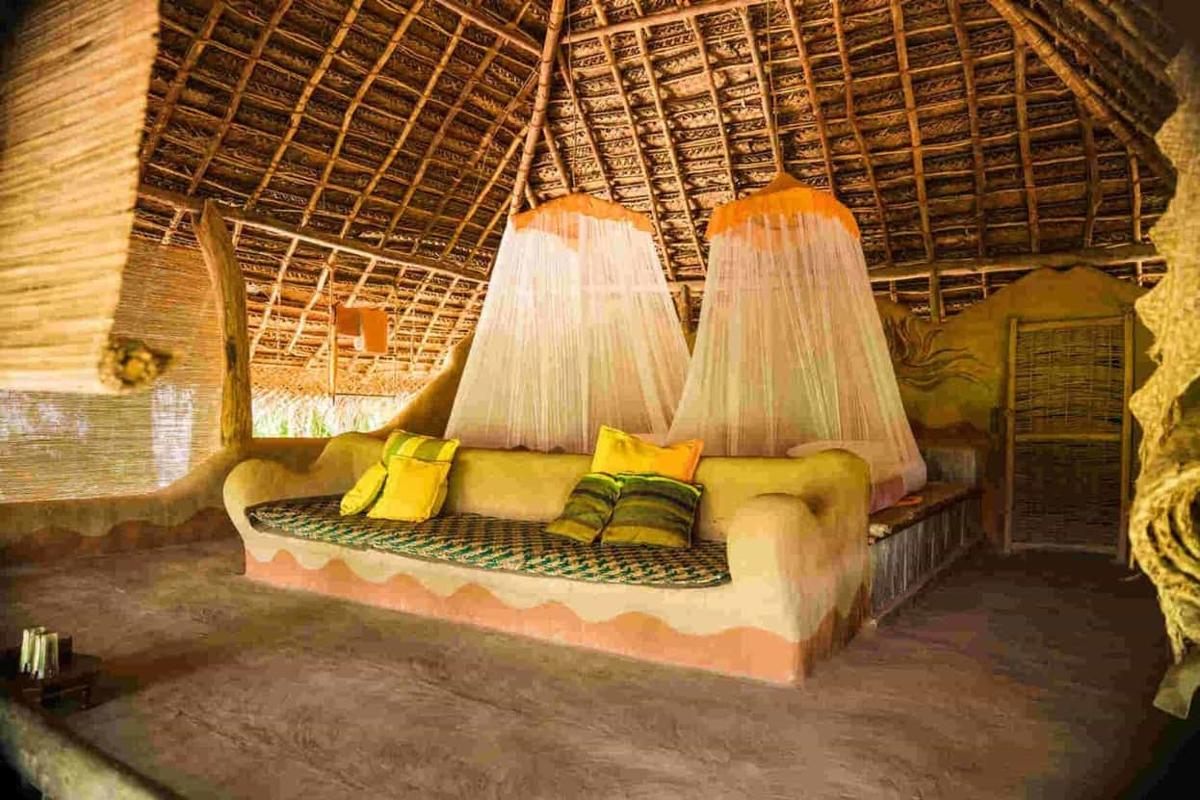
There is a moment at Ulpotha, usually on the first evening, when you realise that the hut you are sleeping in is not a design choice. It is not rustic chic, not a calculated aesthetic, not a boutique hotel's or eco-friendly hotel's interpretation of simplicity. The mud walls, the woven cadjan roof, the earthen floor: these are not gestures toward tradition. They are tradition, rebuilt from memory and carried forward with intention.
Understanding why Ulpotha was built the way it was means understanding what it was always meant to be. The mud huts were never romantic. They were the point.
The word puranagama simply means “ancient village,” but that translation barely scratches the surface of what the concept encompasses. To the Sri Lankan from a Puranagama background, nature and culture are one. Forest, water, land, agriculture, and a tree shrine to the local deity are all part of a unified whole. Ecological sustainability was achieved by maintaining balance through submission to, respect for, and friendship with nature.
The traditional Sri Lankan village was not organised around convenience or commerce. It was organised around the land: around the paddy cycle, the seasons, the water systems, the relationship between a community and the earth that sustained it. The ambalama, the traveller's resting place. The communal cooking fire. The irrigation tank, the lake. These were not amenities. They were the architecture of a philosophy.
When Ulpotha was rebuilt, it was this model that guided every decision, not a hotel model, not a wellness resort model. The village would grow its own food, managed by the people who lived there year-round. You would arrive into a living community, not a stage set (although it often does feel like a theatre). And the mud huts, built of wattle and daub, that sheltered everyone, villagers and visitors alike, would be built the way huts in this part of the world had always been built: from the earth beneath their feet.
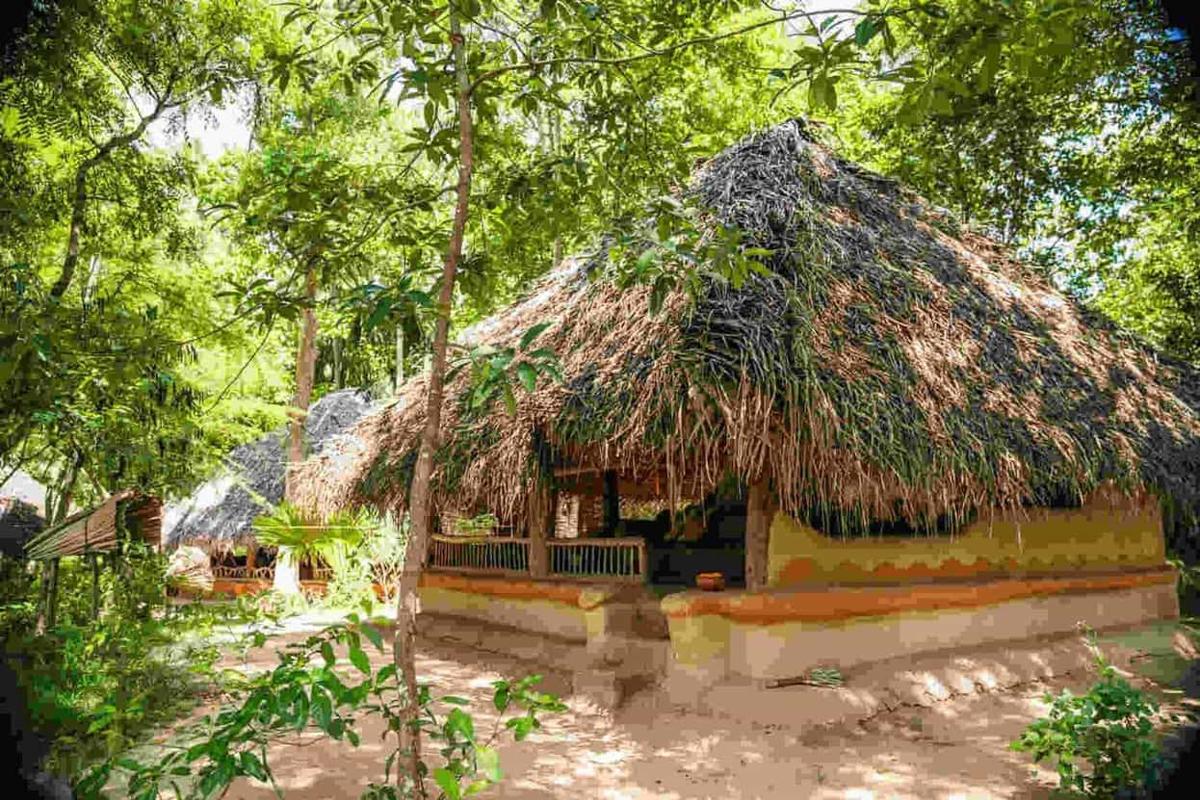
Ulpotha's huts are built using the ancient technique of wattle and daub, one of the oldest construction methods in human history, and one that remains, in many respects, unsurpassed for the tropical climate of Sri Lanka's dry zone.
The process begins with a timber frame: upright posts of local hardwood driven into the ground, forming the structure's skeleton. Between these posts, a lattice is woven from strips of wood or bamboo, creating the wattle, a flexible interlocking matrix that gives the wall its structure. This woven framework is then covered on both sides with a thick mixture of clay-rich soil, water, and organic binders. Traditionally, and at Ulpotha, this mixture incorporates cattle dung, which adds plasticity, binding strength, and natural pest-repellent properties, along with straw or dried grass fibres that prevent cracking as the wall dries.
The result, once dried and cured, is a wall of surprising solidity and thermal intelligence. The huts are re-roofed every two years, and the walls are covered with mud and repainted twice a year in between our seasons, a rhythm of maintenance that is itself a kind of relationship between the structure and the hands that care for it.
The roofs are thatched with cadjan, woven coconut palm fronds, steeply pitched to shed the monsoon rains and deep-eaved to shade the walls from the fierce midday sun. Natural hardwood columns support them, some using living trees as structural elements, so that the building feels less constructed than grown. The floors are compacted earth, sometimes finished with a thin layer of dung and clay that seals and smooths them, naturally cool to bare feet.
“No concrete. No steel reinforcement. No glass in the windows. Just open air, a soft breeze and the sounds of the jungle moving through.”
To a world that has spent a century equating progress with concrete, the idea that a mud wall might be superior to a brick one requires a moment of reorientation. The evidence, thermal, ecological, and physiological, is worth sitting with.
A mud wall breathes. The clay and organic material absorb heat during the day and release it slowly at night, keeping the interior temperature remarkably stable without mechanical assistance. Inside your hut or eco-lodge at Ulpotha, the air is cooler than the jungle around it, not through any intervention, simply through the intelligence of the material itself. A concrete or brick box, by contrast, absorbs and radiates heat, turning into an oven by afternoon and requiring electricity-hungry fans or air conditioning to make it bearable.
Then there is the question of air. Wattle and daub is hygroscopic: it takes up moisture in humid conditions and releases it when conditions are drier. Clay is reputed to draw toxins from the air. The air inside your mud hut has a quality that is immediately perceptible: clean, slightly cool, faintly mineral.
Ecologically, the contrast is stark. The cement industry generates around eight per cent of global CO2 emissions. Mud has a negligible carbon footprint; it is recyclable and can be excavated from the earth. The materials for an Ulpotha hut come almost entirely from the land itself or from within walking distance. When a hut eventually returns to the earth, it leaves nothing behind.
And then there is something harder to quantify, though it may matter most. A mud hut does not impose itself on its landscape. It is part of it. The walls carry the colour of the local soil. The roof carries the pattern of the local palm. The building and the land around it exist in a visual and material continuity that no imported material can replicate. Sleeping in your hut at Ulpotha, you are never in any doubt about where you are.
None of this was accidental. Ulpotha was not built with mud because it was cheap, fashionable, or photogenic for magazine spreads. It was built with mud because the puranagama model demands integrity: a coherence between values and materials, between intention and form.
The Ayurveda you receive at Ulpotha, rooted, elemental, unhurried, cannot be separated from the hut in which you rest afterwards. The food pulled fresh from the paddy fields, the lamplight that replaces electricity, the sounds of the jungle unmediated by glass or air conditioning: these are not features. They are a single, coherent argument for a particular way of living.
The mud hut is where that argument sleeps. And most people, by the end of their first week, find they have never slept better in their lives.
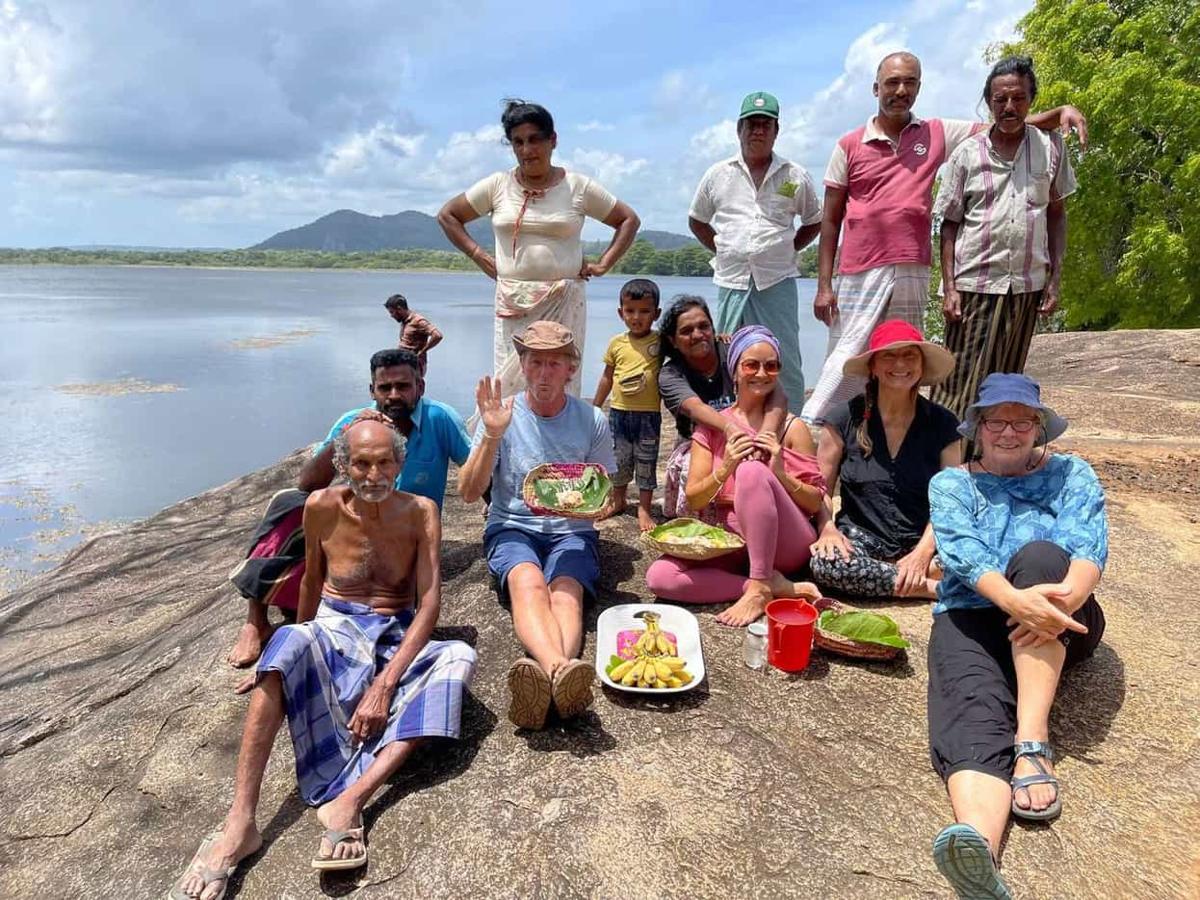
In the founders' words
Ulpotha has no aspiration to be anything other than what it is - a lovely, playful but honouring folly. Ulpotha is there to be enjoyed as one wishes and taken for what it is: an enchanting place that sprinkles its magic dust on those who pass through.
Ulpotha is in itself an integrated privately-run community that nurtures close ties to the surrounding villages. The best expression of how well integrated it is is demonstrated by the fact that it has safely existed for over 30 years without walls, gates, locks or security guards, protected as it is by the goodwill of everyone within and around it.
It is managed day to day by a committee of its own villagers which has five to six members, two of whom are permanent (one female and one male). The other four change annually with at least one being female. The founders, who are consulted by the committee as and when the committee requires, loosely oversee the big-picture building and investment decisions.
The free Ayurveda clinic run by Ulpotha for surrounding villagers is an example of giving back to the community. Apart from the clinic, Ulpotha supports local temples and shrines and engages in low-key community support to schools, hospitals, village-level charities, water management, etc.
The above is a short summary of what Ulpotha is about. If you are interested in the original story behind Ulpotha and everything that went into making it what it is today, we invite you to read What Ulpotha is about.
Village life
Most people arrive at Ulpotha having looked at the photographs without a clear sense of what their time here will actually feel like....
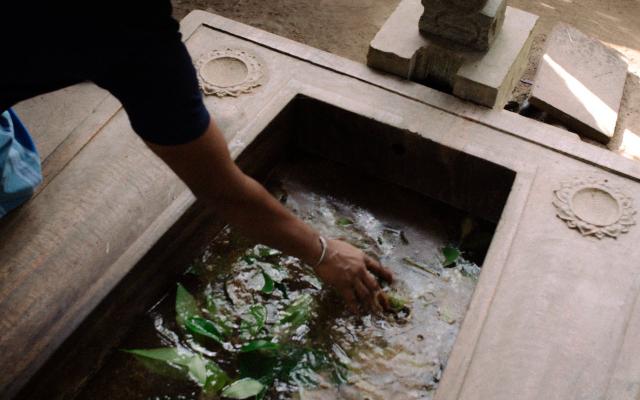
Ayurveda
How Ayurveda works at Ulpotha alongside your yoga retreat, and which treatments are offered.
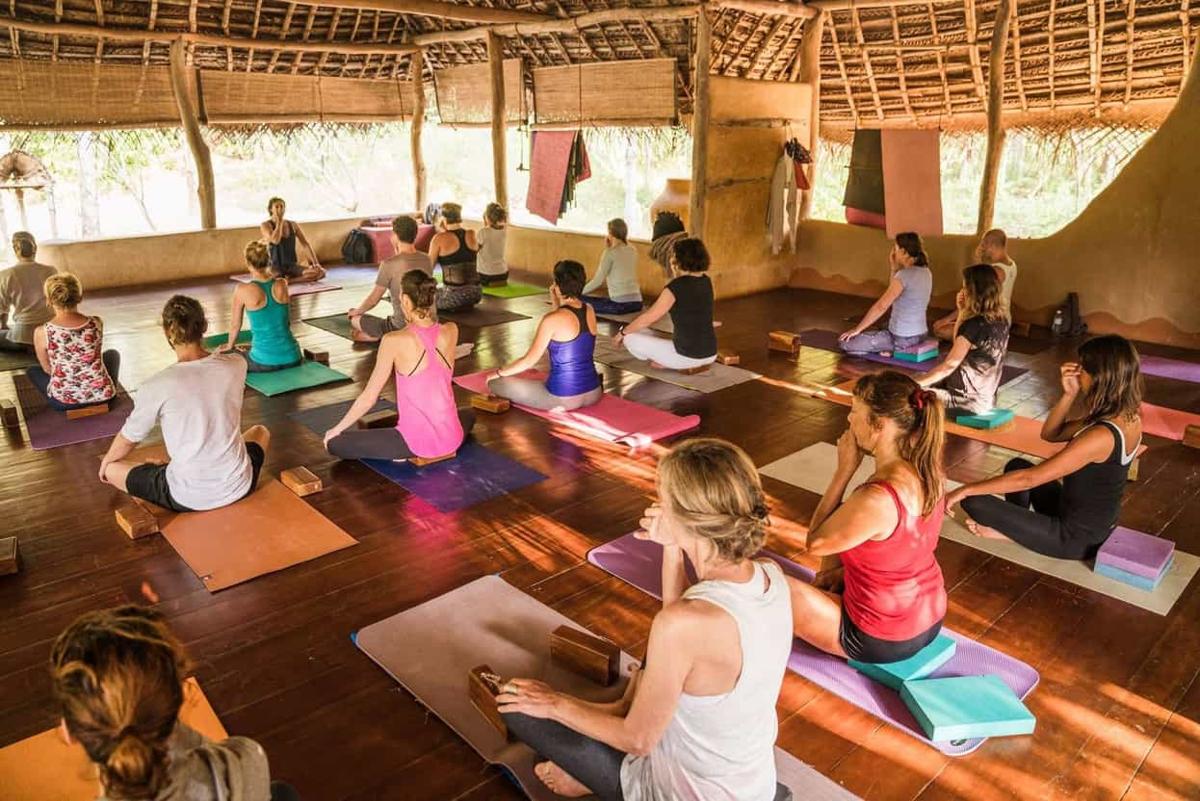
Yoga
The best yoga retreat in Sri Lanka question is a relatively easy one to answer in our opinion but takes longer to research than people...
The farming seasons
Ulpotha is open during the farming seasons: June to Mid-August and Mid-November to the end of March.
Ulpotha opens only part of the year so the local community can use the land sustainably when it is closed. That cadence shapes everything here.